
BRAIN × BODY · PRODUCT GUIDE
The joy of thinking and moving together
Brain Touch DoDream connects remembering, choosing and responding to lights with tapping physical pads. It starts with making training an activity people want to return to.
Updated · UNIVR
What is cognitive training?
Activities challenge memory, attention, judgment, visuospatial skills and impulse control. Brain Touch turns reading a task, selecting a signal and recalling a sequence into varied games.
What is dual-task training?
A thinking task is combined with a movement task. In Brain Touch, identifying the right color or position and tapping a pad take place within the same play activity.
How does cognitive exercise become play?
Players see, listen, tap pads with their fists and move their upper body. Music, scores and visible achievements add motivation to take part.
Two programs: rhythm play and independent brain games
Brain games are a separate program, not an add-on to music play. Seven games are currently available. The cognitive tasks below are examples; the content can continue to grow.
| Brain game | Thinking task | Movement |
|---|---|---|
| Whack-a-mole | Find targets · attention · response | Tap the pad at the appearing target |
| Listen & tap | Auditory attention · number-to-position matching | Listen and tap the matching pad |
| Treasure hunt | Selective attention · searching · judgment | Choose the target and tap |
| Repeat the sequence | Sequence recall · working memory | Tap in the remembered order |
| Color & place | Color-position memory · visuospatial tasks | Tap the remembered position |
| Stop & go | Impulse control · response inhibition | Tap or wait according to the signal |
| Number play | Calculation · attention · selection | Tap the answer you worked out |
Music rhythm play: follow the lights to a favorite song
Players follow LED cues to trot and K-POP music. Rhythmic repetition and a fever sequence invite enjoyable upper-body movement.
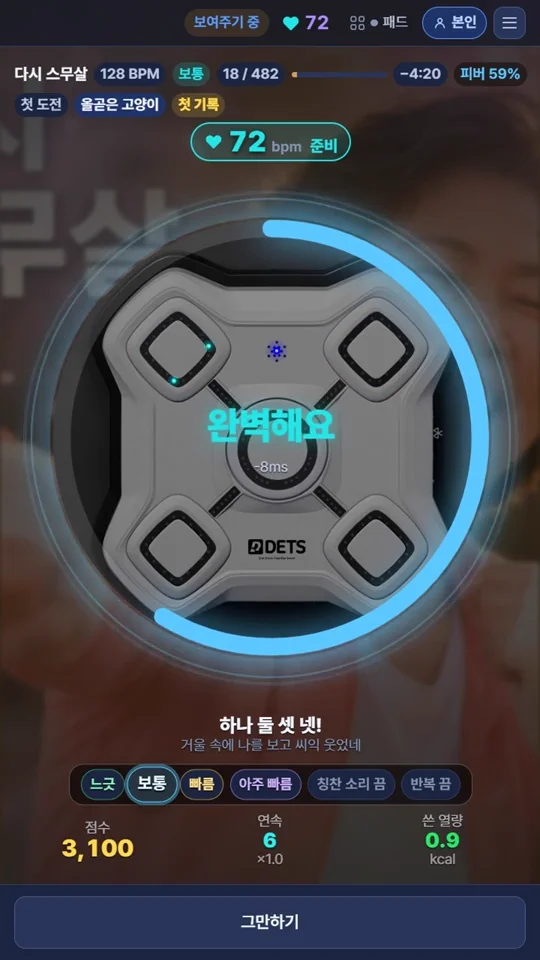
From AI activity guidance to personal records
Question responses and play records inform an initial activity plan, interim reviews and monthly reflections. Friendly voice guidance and easy-to-understand achievements encourage continued participation.
Cognitive training · Cognitive and physical dual tasksWhat can day centers and care homes review?
Facilities can review participation, training time, response, accuracy and heart-rate records. Following an individual’s activity history helps staff explain participation and performance changes to families. The installation configuration is discussed during consultation.
Why consider thinking and movement when concerned about dementia?
The WHO’s 2026 guidelines on reducing cognitive decline and dementia risk cover physical activity, cognitive training and stimulation, and social participation. Brain Touch is a wellness product designed to make participation enjoyable. It is not a medical device for diagnosing or treating dementia.
Read the WHO 2026 guidelines